Monday, May 26, 2008

Artist: Rene Magritte


Surrealist painter Rene Magritte uses various types of mask to create a disturbing effect. He wants to convey, the underlying meaning of the painting plainly. The mask gives a disturbing effect of being trapped, lost, mimicking something else, fear or paranoia.

Thursday, May 22, 2008

The Unmask

Michael Jackson took to wearing masks and face coverings more as his plastic surgery proceeded....
in a way, a mask on top of a mask.


Creating a mask for Michael Jackson which gives us an idea of what he'd look like without all that plastic surgery is ironic. His actual face is like a mask.

By using a mask to show truth, I am contorting the typical use for masks... hiding.


Thursday, May 8, 2008

Final A-B/C KATAKANA

Arranged for the right hand view
Arranged for the top view

These apex' are made up of 6 mini apex's arranged vertically to fit with the theme of Japanese alphabet which is red up and down rather than across.

They are apex' because:

Each mini equation has only three parts A, B and C... the result of each equation is the apex because you can take it no further.

There were six mini equations because 3 is a factor of 6 and there are 6 characters along the top of the Japanese alphabet.

There are six possible ways of combining A B and C in a sequence
ABC
ACB
BAC
BCA
CAB
CBA

These drawings are the ultimate apex of all my equations arranged vertically in order of creation.

Six ways of reaching the apex of A-B/C


1. Initial trial piece which obviously didn't work. I did this using a similar structure as 'flute' but the result is that with too much further trial, there would be nothing left. So I'm going to complete this equation in a completely different way.


2. Resembles outer space images. Interesting idea- the negative space is actually full... shape of the planet is indicated by shapes surrounding it (e.g rings) even though half of it is in darkness.


3. Made mini equations which each result being the apex of each equation. These are some examples of what I did before applying boolean operations.


4. Results of some of my combinations... you can see where the other shapes would have been because of the shapes cut out of my objects.


5. Looks like letters


6. Japanese characters perhaps?

Monday, May 5, 2008

Final A-B-C FLUTE

This object has reached its apex because:

The amount of positive space left adds interest to the negative space and gives it significance.
To keep subtracting would be to loose the effect because there would be nothing to show the shapes that have been taken away.

Run out of room to continue my sequence, it has been repeated as many times as is possible with my particular formula.

Satisfying to the eye, it appears to be finished.

You can recognise the shape it makes- a flute.

Although pieces have been taken out it still retains the appearance of being one object (rather than little pieces joined together).

Six ways of reaching the apex to A-B-C

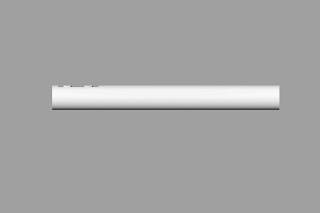
1. I decided to go for a more structured sequence for making apex #2. I started with one of my shaped (the tube= A) and took away first B, then C and then A. I repeated this sequence over and over again.
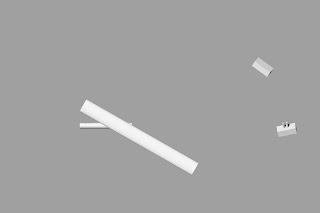


2. Although I didn't stick to resizing the shapes the same quantity, I did rotate each shape more uniformly. Almost all my A's were rotated like this.


3. At first I was unsure about the result of taking away a tube from a tube... I thought it would disjoint parts of my tube completely from the other, but it was the result of this experiment that inspired me. I love how the negative space shows and gives so much character to my piece.


4. I decided my object looked somewhat like a flute. I reached this conclusion quicker than when I worked with 'snowflake' because I followed more of a rigid formula.


5. I decided that the bottom too needed work done on it. My object could then be interesting from all views.
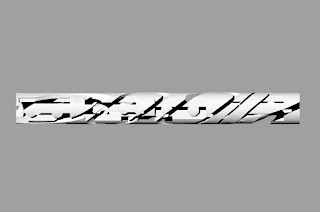


6. As you can see, I systematically subtracted my shapes. There is more evidence of repetition seen e.g the circular shapes continue over the whole upper surface of object.